
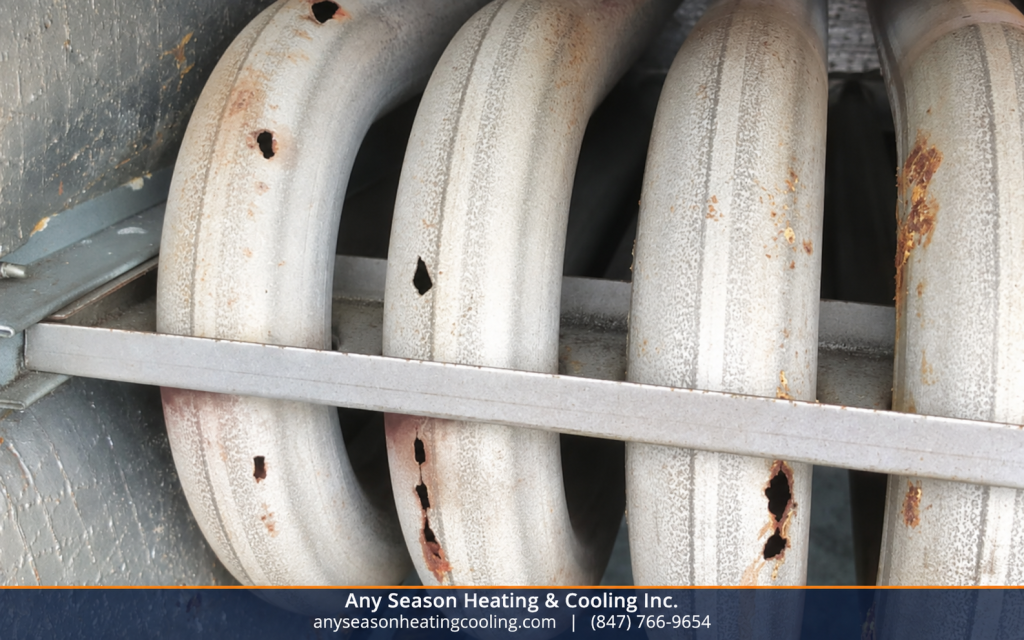
During a recent furnace maintenance visit in Skokie, Illinois, Any Season Heating & Cooling Inc. discovered a serious safety problem in a gas-fired packaged HVAC unit. The heating sequence initially appeared normal, but the burner flames changed as soon as the circulating blower started.
Our subsequent inspection found significant rust and multiple holes in the heat exchanger, confirming that it had failed. We also detected carbon monoxide inside the home while the system was delivering air through the vents.
Watch the Video from Our Skokie Service Visit
Watch the original YouTube Short. This service example illustrates why a furnace inspection must extend beyond confirming that the burners ignite.
What Happened When the Blower Started?
When the thermostat called for heat, the unit began its heating sequence and the burners ignited. Once the circulating blower started moving air, we observed disturbed flames and flame rollout—flames moving outside their intended combustion area.
Shortly afterward, approximately one to two minutes into burner operation, the rollout safety switch tripped and shut down the burners. The timing raised concern about the heat exchanger, but the flame behavior alone was not the final diagnosis.
Flame rollout does not automatically prove that a heat exchanger is cracked. Venting restrictions, combustion problems, and other faults can also cause unsafe flame behavior. A qualified technician must inspect and test the equipment to identify the cause.
How We Confirmed the Heat Exchanger Failure
Inspection revealed substantial rust deterioration and several holes in the heat exchanger. Those openings confirmed a failed heat exchanger rather than a routine maintenance issue.
We also checked for carbon monoxide inside the home and detected CO while heated air was being delivered through the vents. We shut off the unit’s gas and electrical power, explained the findings to the customer, and advised that the equipment remain off until corrective work is completed and safe operation verified.
Why a Damaged Heat Exchanger Is a Safety Concern
A furnace heat exchanger transfers heat from combustion to the air circulating through the home while keeping combustion products separated from that air. Cracks, holes, and corrosion can compromise that separation.
Depending on the unit’s pressures and operating conditions, heat exchanger damage can disturb combustion and create a path for combustion products to enter circulating air. Not every crack produces the same symptoms, and a furnace should not be declared safe simply because it still heats the home or a household alarm remains silent.
A Rollout Switch Is a Warning, Not a Routine Reset
The rollout switch is a protective device that responds to excessive heat near the burners. On this unit, the switch required a manual reset; it did not reset automatically.
Resetting the switch does not repair the problem or confirm safe operation. Never bypass a rollout switch or repeatedly reset it to keep a furnace running. A qualified technician must identify and correct the underlying cause before returning the equipment to service.
Carbon Monoxide: Symptoms Can Be Easy to Miss
Carbon monoxide is an odorless, colorless poisonous gas. Exposure can cause headaches, dizziness, weakness, nausea, chest pain, confusion, loss of consciousness, and death. These symptoms may resemble other illnesses and need medical evaluation rather than a self-diagnosis. Read the CDC’s carbon monoxide guidance.
Working CO alarms are essential, but they are not heat exchanger inspection devices. Residential alarms are not intended to protect against every low-level exposure. A silent alarm does not establish that a furnace is safe. Follow the manufacturer’s installation, testing, and replacement instructions.
If a CO alarm sounds or you suspect CO poisoning, get everyone outside immediately and call 911 from outside. Do not reenter until emergency responders say it is safe. Do not remain indoors to investigate the source or wait for an HVAC appointment.
Schedule Annual Furnace Maintenance and Combustion Testing
The U.S. Consumer Product Safety Commission recommends annual professional inspection of fuel-burning heating systems, including their venting. A thorough visit should address combustion, safety controls, venting, and equipment condition—not simply whether warm air comes from the registers.
Any Season Heating & Cooling Inc. includes combustion testing with furnace maintenance. We explain our findings and discuss appropriate repair or replacement options when a safety problem is discovered.
Learn more about our furnace maintenance and tune-up services or contact our team to schedule a visit in Skokie and the surrounding service area.
Homeowner Safety Resources
CPSC: Carbon Monoxide Fact Sheet
CPSC: What Carbon Monoxide Alarms Are Designed to Do
CPSC: Annual Heating Equipment Inspections