
HVAC UV Light Installation in Des Plaines, IL
HVAC UV light installation can help control biological growth on compatible indoor coils, drain-pan areas, and other illuminated HVAC surfaces.
Any Season Heating & Cooling evaluates the equipment layout, selects an appropriate UV-C application, completes the installation, and explains lamp maintenance for homeowners throughout Des Plaines and nearby northwest suburbs.
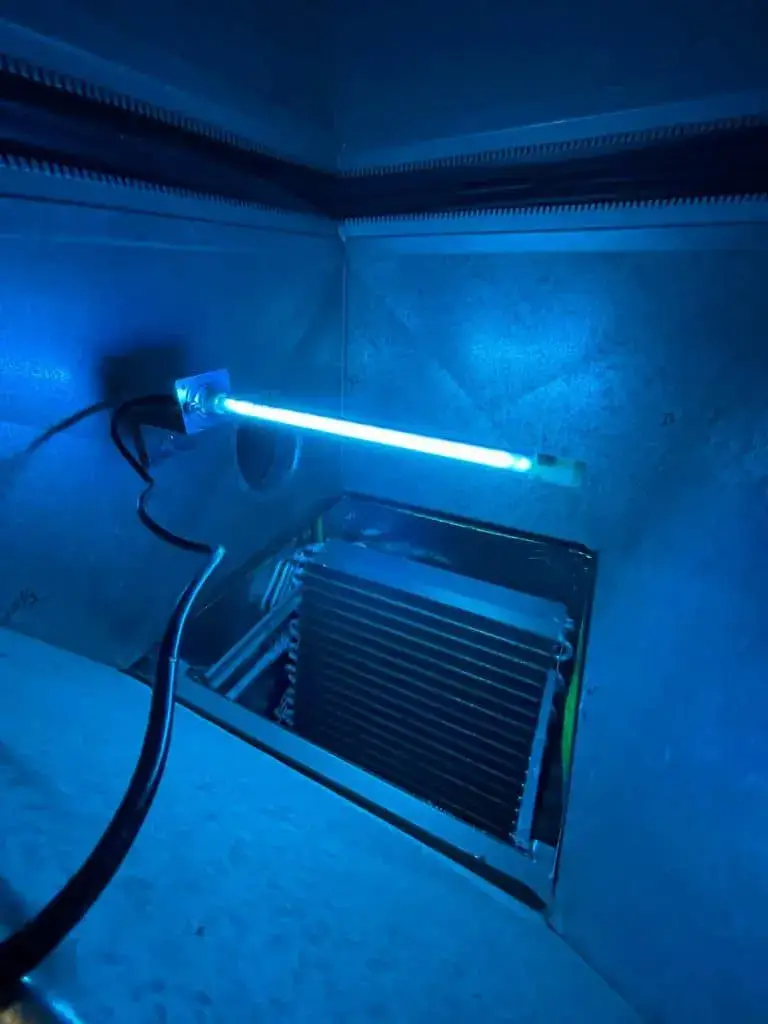
What an HVAC UV-C Light Is Designed to Do
Ultraviolet germicidal irradiation uses UV-C energy in a controlled HVAC application. In residential systems, the most practical use is often continuous illumination of the evaporator coil and nearby drain-pan area—cool, damp locations where biological material may develop when conditions allow.
A professionally installed UV system is not a universal air-quality cure. Its performance depends on lamp output, placement, exposure time, airflow, cleanliness, equipment geometry, and maintenance. We recommend UV equipment only when the application fits the homeowner’s HVAC system and indoor-comfort goals.
Coil-Surface Treatment
Primary goal: illuminate the indoor coil and nearby surfaces to help limit biological growth where moisture commonly occurs.
In-Duct Air Treatment
Primary goal: expose moving air to a designed UV-C field. Results depend heavily on product output, duct dimensions, airflow speed, and installation geometry.
Integrated IAQ Planning
Primary goal: use UV as one part of a plan that may also include filtration, humidity management, ventilation, cleaning, and equipment maintenance.
When Homeowners Consider UV Light Installation
UV light may be worth discussing when the indoor coil remains damp for extended periods, biological growth repeatedly develops on illuminated HVAC surfaces, or a homeowner wants another layer of equipment-surface control. A visual HVAC inspection comes first because drainage problems, dirt accumulation, air leaks, and neglected filters require direct correction.
- Recurring buildup near the indoor evaporator coil
- Persistent musty odor associated with HVAC operation
- A damp coil cabinet or drain-pan environment
- Interest in continuous coil-surface treatment
- A new furnace, air handler, or cooling-system installation
- Existing UV equipment with a failed lamp or power supply
- Need for easier lamp-access and maintenance planning
- An indoor-air-quality assessment identifies a suitable application
UV light may help with
Biological growth on directly illuminated HVAC surfaces and, with appropriately designed equipment, some airborne microorganisms passing through the treatment zone.
UV light does not remove
Dust, pollen, smoke particles, pet hair, construction debris, gases, or odors by filtration. It also does not repair water leaks, blocked drains, dirty ductwork, or faulty HVAC equipment.
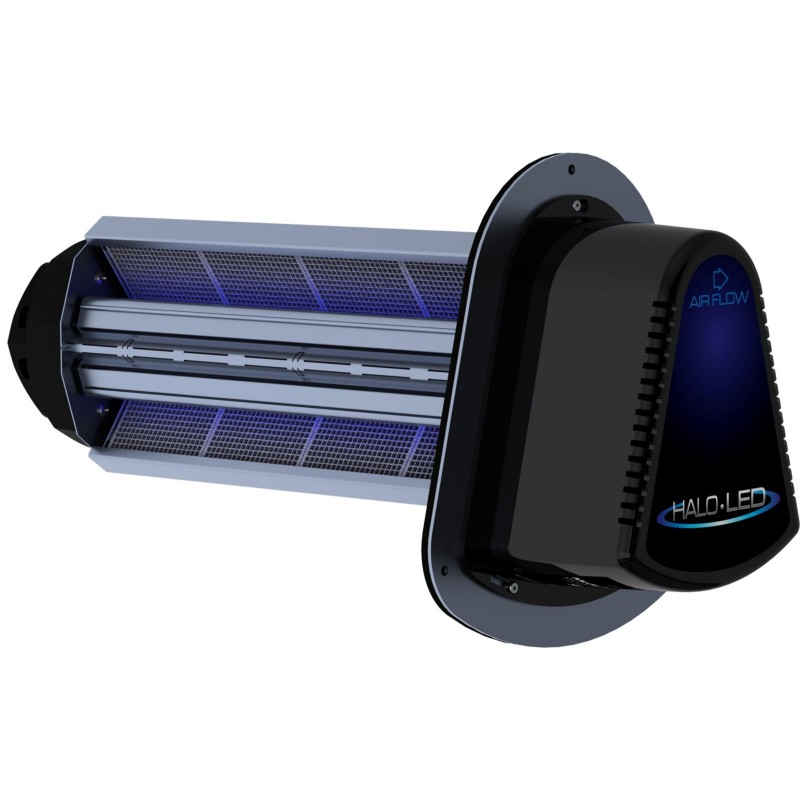
UV Light, Air Purifier, or Better Filter?
These products are not interchangeable. UV-C addresses susceptible biological material within the illuminated zone. A mechanical filter captures particles as air passes through it. Some electronic or media air cleaners provide additional particle-control options.
We help homeowners compare UV equipment with professional air purifier installation, indoor air quality services, and humidity-control options rather than promising that one product solves every concern.
Our UV Light Installation Process
Inspect the HVAC System
We review the furnace or air handler, coil cabinet, accessible ductwork, drainage, available electrical supply, service panels, and possible mounting locations.
Select the Application
We determine whether coil-surface treatment, an in-duct product, or another indoor-air-quality approach is the better fit for the system and homeowner’s goal.
Install and Protect
We mount the compatible equipment, complete applicable electrical connections, position the lamp, shield UV-sensitive materials when required, and preserve safe service access.
Test and Explain
We confirm operation, check panel and safety considerations, record the product information, and explain cleaning and lamp-replacement requirements.
Safety, Placement, and Material Protection
UV-C should not be directly viewed or allowed to expose skin. Proper installation keeps the lamp enclosed inside compatible HVAC equipment or ductwork and includes applicable access-panel and warning considerations. Homeowners should turn off power and follow manufacturer instructions before inspection or lamp replacement.
Placement is also important because prolonged UV exposure can degrade certain plastics, wire insulation, filter materials, drain components, and other susceptible products. We inspect the proposed treatment zone and use the manufacturer’s placement and shielding guidance.
UV Lamp Replacement and HVAC Maintenance
UV lamps lose germicidal output over time even when they continue to produce visible light. Replacement schedules vary by manufacturer and operating conditions, so we use the installed product’s instructions rather than a single universal interval. Lamps and reflectors may also require careful cleaning because dust can reduce delivered UV energy.
UV equipment should be checked during routine HVAC maintenance. We can inspect operation, accessible wiring, lamp condition, mounting, and the surrounding HVAC area. If the system has temperature-control problems, our thermostat installation and HVAC controls page explains related control options.
Indoor Air Quality Service Areas
Serving Des Plaines and Nearby Northwest Suburbs
We provide residential HVAC UV light installation and related indoor-air-quality service in Des Plaines, Mount Prospect, Prospect Heights, Arlington Heights, Glenview, Niles, Morton Grove, Park Ridge, Rosemont, Norridge, Elk Grove Village, Palatine, Buffalo Grove, Schaumburg, Wheeling, Northbrook, Lake Zurich, Rolling Meadows, Hoffman Estates, Schiller Park, Skokie, and nearby communities.
Visit our HVAC service-area directory or explore our complete residential HVAC services.
HVAC UV Light Installation FAQs
Where is an HVAC UV light installed?
Placement depends on the intended application and equipment layout. A common approach is positioning UV-C near the indoor coil and drain-pan area. Some products are designed for installation in supply or return ductwork.
Does an HVAC UV light replace an air filter?
No. UV equipment does not capture dust, pollen, pet hair, or other particles. It should be used with a suitable filter and normal HVAC maintenance.
Can UV light eliminate every HVAC odor?
No. Odors may come from drainage problems, dirty coils, standing water, duct contamination, filters, household sources, or mechanical issues. The cause should be identified before selecting treatment.
How often does the UV lamp need replacement?
The interval depends on the product and operating hours. Many manufacturers specify periodic replacement even if the lamp still gives off visible light because useful UV-C output declines over time.
Can UV-C damage HVAC components?
Long-term exposure can degrade susceptible plastics, insulation, wiring jackets, filters, and other materials. Correct placement and shielding help protect components.
Can you service an existing HVAC UV system?
Yes. We can inspect accessible residential UV equipment, determine whether the lamp and power supply operate, and discuss compatible maintenance or replacement options.
Should the coil be cleaned before installing UV?
If the coil or cabinet is dirty, cleaning and drainage correction may be necessary first. UV equipment is intended to help control future growth in the illuminated area, not remove heavy existing debris.
Indoor Air Quality and HVAC Customer Reviews
Read feedback from homeowners who called Any Season Heating & Cooling for heating, cooling, and indoor-comfort service.
-
Great impromptu service!!!! The technician was able to diagnose my problem instantly when other service centers were not able.

Ralph J Licari
March 14, 2026Eddy and his team where fabulous.. On time, reasonable, and completed the work they said they would.. What's not to like!
Donald Smith
July 13, 2025It was -11 degrees outside and my heating system decided to shut off. I called a few places and no one was able to come until the day after. I... read more
Vinu Nair
February 10, 2024 -
Thank you for the excellent services.
Nina Kilyan
September 10, 2023Professional heating and air conditioning company, did fix my gas furnace at low cost and install new furnace for my neighbor, highly recommended, ask for Eddie or Adam.
Ali Saida
November 27, 2022Wonderful service! Very helpful.
Eric Helm
October 28, 2025 -
I had a popular competitor give a quote for a new A/C and furnace. The competitor advertised buying an A/C and getting a furnace for “free”. Any Season Heating and... read more
John Ollerer
September 10, 2023Highly recommend this business for furnace repair! Very professional, responsive, skilled, and reasonably priced. I had an issue with my furnace on one of the coldest days, and... read more
Anil Bhojwani
December 27, 2022Great company! First time using them and my husband and I will continue with their services. Honest and affordable. Thanks guys.
Johanna Perez
January 27, 2020 -
This company are so good I called them any write way they were at my property to take care of the problem And eddy he found the problem and have... read more
Linda Swenson
February 10, 2024I had a furnace break down late in the evening at a rental property I own leaving my tenants with no heat. I called Any Season at 10:00pm, and they... read more
RLB Cycleworks
February 6, 2025AC decided to take a nap on one of the hottest days of the year. Called and within 40 minutes the tech was knocking on my door. Fixed the issue... read more
Pete M
January 27, 2022 -
Any season heating and cooling did great job in repairing my home air conditioner, I use someone else before, I called them and he recommended that I change my entire... read more
Mohammad Sawaed
January 27, 2020I called Any Season because our AC went out. I could hear the thermostat click but the unit would not start. I could also hear clicking in the furnace. Wound... read more
David
September 10, 2023Great experience! He was very kind and honest. We will continue to work with them for maintenance.
May PT
April 21, 2025
For independent information about residential air-cleaning technologies and their limitations, review the U.S. Environmental Protection Agency’s guide to air cleaners and air filters in the home.
Request an HVAC UV Light Evaluation
Contact Any Season Heating & Cooling for professional residential HVAC UV light installation in Des Plaines and nearby northwest suburbs.
Follow Us: Google Maps | Facebook | X/Twitter | LinkedIn